
"Ugandan Arabica"
400 article(s) found

Uganda Coffee A brief introduction to the Environment of Ugandan Coffee characteristics of Ugandan Coffee
Professional coffee knowledge exchange more information about coffee beans please follow the coffee workshop (Wechat official account cafe_style) Uganda is a landlocked country in eastern Africa. Just as Ethiopia is the origin of Arabica coffee, Uganda is one of the few major countries in Africa dedicated to the production of organic coffee. The most famous coffee producing area in Uganda is the buckyasu area in the north near the Kenyan border.

Introduction to the flavor and taste of Ugandan boutique coffee beans in the mountains of Elgon and Bugisu
Uganda Uganda Coffee introduction in Uganda (Uganda), Arabica coffee beans account for only 10% of the country's total coffee production, but it is enough to attract attention. The best coffee in Uganda is mainly produced in the mountains of Elgon and Bugisu along the Kenyan border in the north and Ruwensori in the west.

A brief introduction to the description of the flavor and aroma characteristics of Ugandan coffee
The official ranks are Oaganic (Organic), Bugisu AA, Bugisu A, Bugisu B, Bugisu PB, Wugar, Drugar and other unlisted grades. To find a good Ugandan coffee, you must first recognize the BugisuAA, An and PB grades, but because the country is inland and has many transportation problems, it often has low moisture content and does not look green.

Introduction to Ugandan Coffee how to Bake Ugandan Coffee and how well it is roasted
Professional coffee knowledge exchange more coffee bean information please follow the coffee workshop (Wechat official account cafe_style)

Introduction to which is better to describe the taste and flavor of raw beans instead of Ugandan coffee
Uganda Coffee Uganda is a landlocked country in eastern Africa, straddling the equator, bordering Kenya to the east, Tanzania and Rwanda to the south, the Democratic Republic of the Congo to the west and Sudan to the north. Most of the territory is located in the Central African Plateau, with lakes, with an average elevation of 1000,000,000 meters above sea level. There are many lakes and plateaus in the mountains, which are known as the water villages of the plateau. The western branch of the East African Rift Valley runs through the western border, with many rivers and lakes at the bottom of the valley. Black Gan
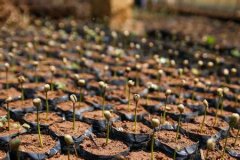
A brief introduction to the history and culture of the origin and development of Ugandan boutique coffee with mild and simple taste
Mbale on the eastern side of Mount Elgon and other producing areas on the western side near the border of the Democratic Republic of the Congo have the export name Wugar. The official ranks are Oaganic (Organic), Bugisu AA, Bugisu A, Bugisu B, Bugisu PB, Wugar, Drugar and other unlisted grades. To find a good Ugandan coffee, you must first recognize BugisuAA and A.

The Ugandan coffee-producing countries of Elgon, the birthplace of Robusta in Africa, and Bujisu (
The coffee growing industry in Uganda is one of the pillar industries of its exports. Uganda is the birthplace of Robsta in Africa, just as Ethiopia is the origin of Arabica coffee, while Robster coffee was first discovered in Uganda. So far, Uganda has a history of growing coffee for more than 100 years. At the same time, Uganda is one of the few major countries in Africa dedicated to the production of organic coffee. In Wu

Introduction of Ugandan coffee bean flavor manor with unique papaya flavor
The coffee growing industry in Uganda is one of the pillar industries of its exports. Uganda is the birthplace of Robsta in Africa, just as Ethiopia is the origin of Arabica coffee, while Robster coffee was first discovered in Uganda. So far, Uganda has a history of growing coffee for more than 100 years. The output ranks second in Africa, after Ethiopia. At the same time, Uganda is also a minority in Africa.
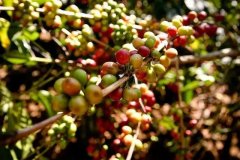
The production of Ugandan Arabica coffee beans accounts for only 10% of the country's total coffee production.
Boutique coffee has a rich and beautiful taste. Even if the coffee made of boutique coffee beans is not all fine coffee, it depends on whether it gives full play to the characteristics of coffee beans, whether it has a good taste, if not, it can not be called boutique coffee. In Uganda (Uganda), Arabica beans account for only 10% of the country's total coffee production, but

Introduction to the characteristic varieties of Ugandan Coffee Flavor Manor
There was an emirate called Kitala in present-day western Uganda before the 13th century AD. In the 13th and 14th century, the nomadic Bachwezi conquered the country. From the end of the 15th century to the beginning of the 16th century, the Luo people who originally lived in southern Sudan went south to replace the rule of the Bachwezi, established the kingdom of Buniolo and established the Babito dynasty in Buganda. These foreign rulers were soon engaged in local farming.
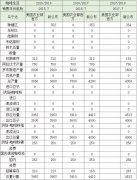
Annual report on Ugandan Coffee 2017
The report stresses that Nairobi forecasts a small increase in Ugandan coffee production in 2017 / 2018 as a result of the harvest of newly mature coffee from the plantation. Exports are expected to remain stable, leading to a small increase in clearing inventories. The Uganda Coffee Development Authority (UCDA) continues to implement a funding scheme from the Government of Uganda (GOU), which aims to increase improved varieties and expand acreage.

Introduction to the export taste of Ugandan coffee flavor production
In Uganda (Uganda), Arabica coffee beans account for only 10 per cent of the country's total coffee production, but it is enough to attract attention. Uganda's best coffee is mainly produced in the mountains of Elgon and Bugisu along the Kenyan border in the north and Ruwensori in the west, and is available for export in January or February of each year. Red

Description of taste and flavor of Ugandan coffee beans introduction to the production areas of varieties by grinding scale treatment
Uganda coffee beans are very suitable for making Italian and other kinds of coffee. More importantly, Ugandan coffee beans are strictly screened in accordance with the standards of the international market to ensure their high quality and pollution-free characteristics. Africa is the two main varieties of coffee, Arabica and Ro.

Introduction to the planting environment of Ugandan boutique coffee beans with delicate taste
According to the 1942 Constitution, Uganda adopted a federal system after its independence, and the kingdoms of Buganda, Bunioro, Toro and Ancole, as well as the Busoga Special District, were all members of the Federation. The people's Congress Party and the Kabakayeka Party form a coalition government, with Milton Obote, chairman of the people's Congress Party, as prime minister, and King Mutsa II of Buganda as president. The bipartisan alliance broke down in 1964

Ugandan Coffee with delicate fragrance introduces boutique coffee
Mbale on the eastern side of Mount Elgon and other producing areas on the western side near the border of the Democratic Republic of the Congo have the export name Wugar. The official ranks are Oaganic (Organic), Bugisu AA, Bugisu A, Bugisu B, Bugisu PB, Wugar, Drugar and other unlisted grades. To find a good Ugandan coffee, you must first recognize BugisuAA and A.

A brief introduction to the treatment method of grinding degree and baking degree of high-quality and pollution-free Ugandan boutique coffee beans
Most of Uganda is located in the Central African Plateau, with lakes, with an average elevation of 1000 mi 1200 meters. There are many lakes and plateaus in the mountains, which are known as the water villages of the plateau. The western branch of the East African Rift Valley runs through the western border, with many rivers and lakes at the bottom of the valley. Uganda has a great Victoria lake, coupled with the high mountains, which makes Uganda a mild climate suitable for growing coffee, although it spans both sides of the equator. Right and wrong in Uganda

Introduction of Ugandan Coffee Flavor the taste of Ugandan coffee beans in Uganda's boutique coffee bean producing area
In order to improve the quality and reduce the cost of coffee, Uganda cancelled the exclusive management right of the Coffee Management Committee (Coffee Marketing Board, referred to as CMB) in November 1990. Most of the work originally undertaken by the Coffee Management Committee has now been handed over to the cooperative organization. Privatized coffee accounts for 2% of the country's export revenue, so the government levies coffee shops.

Ugandan coffee with thick taste and low acidity introduces fine coffee.
The equator runs across Uganda, and the suitable climate makes it the main producing area of Robbins coffee beans (Robusta) in the world. In the 1960s, Ugandan coffee production remained at 3.5 million bags a year. By the mid-1980s, coffee production had dropped to 250 bags a year, mainly for political reasons. But now coffee production is on the rise again, currently about 3 million bags a year. Coffee

Description of taste and flavor of Ugandan coffee introduction to manors of variety producing areas
The taste and flavor of Ugandan coffee is described by the variety producing area. Africa is the hometown of the two major varieties of coffee, Arabica and Robusta, while Uganda, which is located in eastern Africa, which enjoys the reputation of plateau water and the pearl of East Africa, is believed by many people as the birthplace of Robusta. Uganda is one of the few countries in the world that can grow both Arabica and Robusta.

Simple and mild flavor of Ugandan coffee the characteristics of the manor producing area introduce the fine coffee beans of Uganda
Ugandan coffee beans have a unique flavor of delicate taste, which is very suitable for making Italian and other flavors of coffee. More importantly, Ugandan coffee beans are strictly screened according to the standards of the international market to ensure their high quality and pollution-free characteristics. Africa is the hometown of two major varieties of coffee, Arabica and Robusta, while the eastern Africa enjoys a plateau water hometown and a pearl of East Africa.